What is STEM’s Innovation?
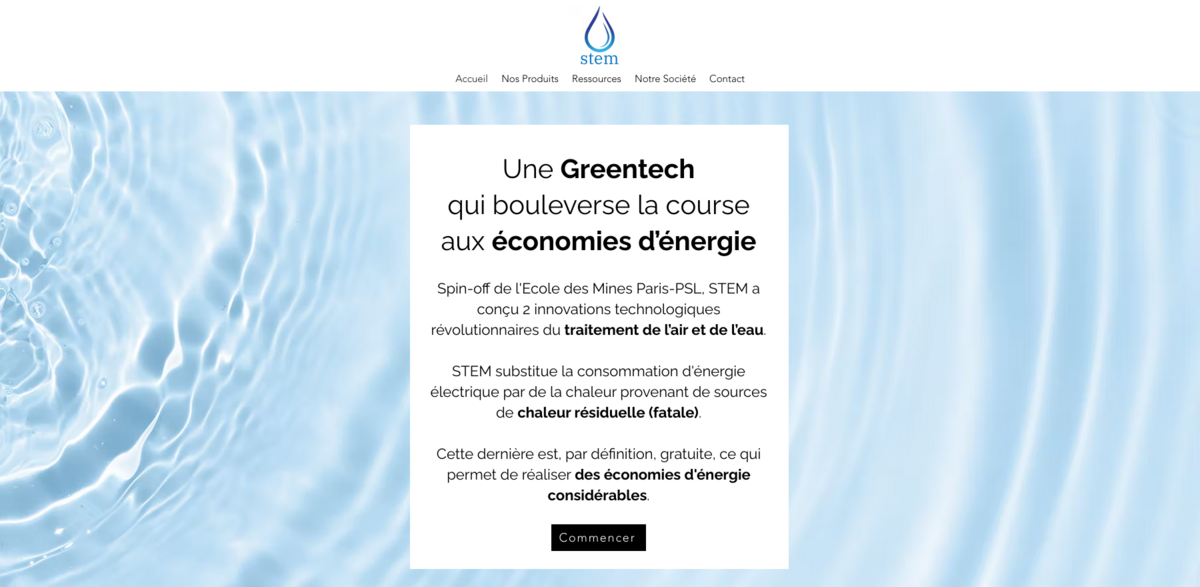
A GREEN TECH THAT REVOLUTIONIZES THE RACE FOR ENERGY SAVINGS – that’s the bold promise behind this breakthrough. Emerging as a spin‐off from the École des Mines Paris-PSL in 2020, STEM has introduced an inventive approach for air and water treatment that taps into the potential of residual heat sources. Instead of relying on conventional electricity, this technology harnesses waste heat – free energy that transforms how industries view efficiency. By capturing the simplicity of water vapor exchange through a membrane, this method not only saves energy but also redefines the possibilities of heat recovery. The approach is built on the physics of phase change and leverages an ingenious twist: condensing and evaporating water in a controlled design. Tested rigorously, the process delivers reliable performance while inviting industries to transition from high-cost, high-emission systems to smart, sustainable alternatives… a refreshing take on an age-old challenge.
Main Benefit
STEM’s solution brings tangible benefits that disrupt traditional practices. The technology offers impressive energy savings and environmental advantages, supported by compelling figures that confirm its efficiency:
- Up to 75% energy savings
- 3 Patents secured – the first filed in 2018 and granted at the end of 2022, the second filed in March 2023, and the third filed in September 2024
- 2 pilot sites already in operation, validating its real-world success
These numbers speak volumes about the leap forward in technology and performance. Integrators are taking notice, as these breakthroughs offer a clear path to both innovative design and measurable sustainability gains.
Technological Challenge and Traditional Methods
For 25 long years, technological solutions for air and water treatment remained stagnant, lacking the dynamism needed to tackle modern energy and climate demands. Traditional approaches relied heavily on outdated energy consumption methods, offering only marginal improvements despite repeated efforts. The persistence of these conventional techniques left a significant gap—a gap that STEM now fills. With no substantial advancements in decades, the old systems failed to provide the efficiency or environmental benefits required by today’s industries. This long-standing challenge created the perfect backdrop for a revolutionary idea, one that questions the limits of traditional methods and dares to reimagine them entirely… proving that a fresh perspective can break through entrenched inefficiencies.
Innovative Process in Focus
At the heart of this green tech lies a simple principle: water vapor exchange through a membrane. This process relies on a patented heat exchange method involving the condensation and evaporation of water, making it both elegant and effective. Products such as NEODRY for air dehumidification, AQUAHIVE for water distillation, and NEOPOOL—which ingeniously combines the strengths of both approaches—underscore the versatility of this design. The membrane system operates with precision, using residual heat that would otherwise be wasted. This simplicity is deceptive; its effectiveness has been validated through rigorous testing in pilot projects and real-world applications. By focusing on the fundamentals of heat and mass transfer, the technology turns a once-overlooked energy source into a powerful asset for air and water treatment.
Real-World Impact and Applications
Beyond theoretical models and laboratory experiments, STEM’s innovations have proven their mettle in real-world applications. Pilot sites around the country have demonstrated that this technology works reliably under operational conditions, addressing the severe environmental impact of industrial and tertiary processes. Actual performance metrics show energy savings ranging from 30% up to 90%, while reducing CO2 emissions significantly. Industries now have access to solutions that tackle air dehumidification, water distillation, and even simultaneous air treatment with water heating – all enabled by this forward-thinking design. With a combination of waste heat recovery and smart AI-powered optimization, the technology is not only cutting costs but also paving the way for cleaner production practices. This real-life validation confirms that a practical, high-impact solution is now available where outdated systems once dominated.
Project Impact on Sustainable Development Goals
- SDG 7: Affordable and Clean Energy
- SDG 9: Industry, Innovation and Infrastructure
- SDG 13: Climate Action
Looking Ahead
With a seasoned team at the forefront, the project is set to drive meaningful change in the way energy is utilized and conserved. By transforming residual heat—once wasted—into a valuable resource, this technology paves a new path for sustainable industrial practices. The innovative use of AI for optimizing performance further signals a shift towards smart, data-driven decision making in energy management. As regulatory pressures increase and global sustainability targets become more critical, such solutions offer a glimpse into the future of efficiency and environmental care… a future where outdated practices are replaced by inventive, scalable technologies. The journey ahead looks promising, with opportunities for further innovation, even deeper energy savings, and expanded applications across diverse sectors.
What STEM actually does
STEM is a Paris company, founded in November 2020 as a Mines Paris PSL spin-off, that designs and manufactures industrial equipment built on water vapour-permeable membranes. The membrane lets only pure water vapour pass through, and the process runs on low-temperature waste heat that factories usually throw away, which is what keeps its energy use low.
Where the technology shows up
- Industrial effluent treatment (AQUAHIVE): pollutants, salts and heavy metals stay on the effluent side while clean water vapour crosses the membrane, producing water that can be reused directly in the process.
- Industrial dehumidification (NEODRY): dries air for industrial sites using the same membrane principle instead of conventional energy-intensive drying.
Proof, not just claims
On the Ryssen Alcools site at Loon-Plage, conductivity of the treated water dropped from 129.5 to 5.4 µS/cm, clean enough to go back into the process.
Trusted by
DalkiaEnergy services
Dalkia Froid SolutionsIndustrial refrigeration
Ryssen AlcoolsDistillery, Loon-Plage
TCS ControlIndustrial client
Why this belongs on a sustainability directory
STEM supports SDG 6 (clean water and sanitation) by turning industrial wastewater into process-ready water instead of discharging it, and SDG 7, 12 and 13 by running that treatment and its dehumidification line on recovered waste heat with a fraction of the energy conventional systems need.
Frequently asked questions
Where is STEM based, and who uses it?
STEM is based in Paris, France. It sells membrane-based effluent treatment and dehumidification systems to industrial sites, and names Veolia, Dalkia, Dalkia Froid Solutions, Ryssen Alcools and TCS Control among its clients.
Which SDGs does STEM support, and how?
SDG 6 (clean water and sanitation): AQUAHIVE separates pure water from industrial effluent so it can be reused on site. SDG 7 (affordable and clean energy) and SDG 13 (climate action): both product lines run on low-temperature waste heat, using around 1 kWh/m³ for effluent treatment versus 60 to 160 kWh/m³ for alternatives. SDG 12 (responsible consumption and production): water and heat that would be lost are put back into the production cycle.
How is STEM verified as a sustainability project?
STEM’s NEODRY dehumidification solution holds the Solar Impulse Foundation’s Efficient Solution label, and the company lists support from ADEME, Bpifrance and Mines Paris PSL.
Looking for similar water management projects?
See Water management projects, or browse all Energy projects.