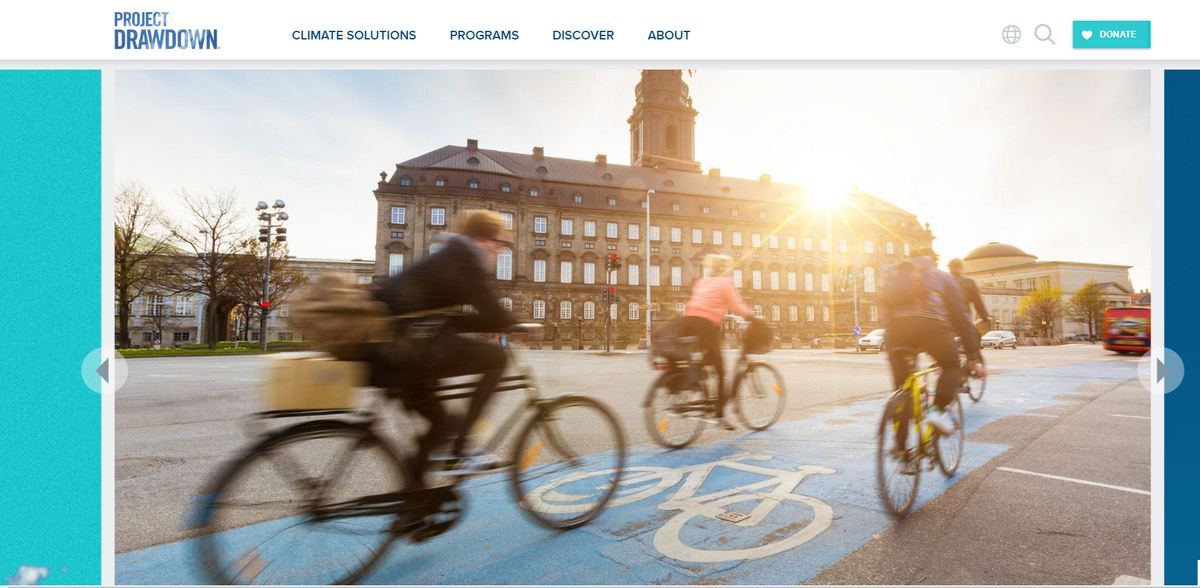
Introduction to Project Drawdown
Climate change is a significant issue affecting everyone, everywhere. Project Drawdown is dedicated to addressing this challenge by working on solutions that can make a difference. This initiative focuses on identifying ways to reduce greenhouse gas emissions and promote the health of our planet. It’s important to recognize that both large-scale and small individual actions contribute to creating a better world.
Key Initiatives
- Offers science-based solutions to combat climate change.
- Focuses on local and global actions for sustainability.
- Encourages education and job opportunities in clean energy.
- Promotes plant-rich diets for healthier living.
- Engages communities in climate action.
Understanding Drawdown
Drawdown refers to the point at which greenhouse gas concentrations in the atmosphere cease to rise and begin to decline. Project Drawdown is optimistic about reaching this milestone by mid-century and has identified 93 actionable solutions rooted in science and research. These solutions encompass various areas, including energy, food, and societal structures.
Local and Global Solutions
Climate solutions are applicable both locally and globally. Project Drawdown collaborates with communities worldwide to emphasize collective actions. For instance, adopting plant-rich diets can significantly lower emissions. This accessible change allows everyone to contribute meaningfully to the climate movement.
Education and Employment Opportunities
The shift toward clean energy encompasses more than just technology; it also fosters new job and educational prospects. Project Drawdown is committed to empowering communities with knowledge about these emerging opportunities. By providing resources and support, they enable communities to flourish while simultaneously caring for the planet. Education plays a crucial role in facilitating sustainable changes.
Engaging Communities
Project Drawdown recognizes the strength of community engagement. They inspire individuals to share their stories and experiences, highlighting the significance of taking action. Personal narratives can motivate others and create a sense of belonging. Each individual has a vital role in the broader movement toward sustainability.
Science-Based Solutions
At the core of Project Drawdown’s mission is a commitment to scientific rigor. They collaborate with experts to assess the effectiveness of their strategies, ensuring that every solution is grounded in solid research. By emphasizing a science-backed approach, Project Drawdown aims to effect genuine change in combating climate change.
United Nations Sustainable Development Goals
- Goal 2: Zero Hunger
- Goal 3: Good Health and Well-Being
- Goal 4: Quality Education
- Goal 7: Affordable and Clean Energy
- Goal 13: Climate Action
For more information about Project Drawdown and their initiatives, visit their website.
What Project Drawdown actually does
Project Drawdown is a 501(c)(3) nonprofit whose mission is “to drive meaningful climate action by advancing science-based solutions and strategies.” It researches which climate solutions are most effective, models how much emissions each could avoid, and designs strategies to scale them. Its free Drawdown Explorer platform covers more than 140 technologies and practices, from distributed solar PV and offshore wind to composting and peatland protection, each with an estimated range of avoided emissions.
The organization works across three pillars: science (the research itself), stakeholders (equipping policymakers, philanthropists, investors, business leaders and community leaders to act) and stories (shifting the climate conversation from problems to solutions). Practical tools include the Drawdown Roadmap, the SHIFT personal climate action guide, job function action guides and the Drawdown Learn video series.
“Project Drawdown has been incredibly instrumental in guiding Toniic members’ climate investment decisions.”
Dario Parziale, Managing Director, Programs, Toniic
Who uses Project Drawdown’s research
- Investors and philanthropists: evidence on which solutions deliver the most emissions reduction per dollar, to steer capital toward them
- Business leaders: job function action guides that translate climate solutions into specific workplace roles
- Policymakers: the Drawdown Roadmap, a science-based strategy for accelerating climate solutions
- Individuals and educators: SHIFT, Drawdown Learn and the Drawdown Insider newsletter
Proof, not just claims
Project Drawdown also reports 5 million views of its climate solutions videos, and its work has been presented at TED, COP28 and Climate Week NYC. 1% for the Planet lists it as an Environmental Partner.
Trusted by
Stewart InvestorsInvestment manager
ReFEDFood waste nonprofit
The Nature ConservancyConservation nonprofit
MicrosoftTechnology company
Why this belongs on a sustainability directory
Climate money and policy often flow to the most visible solutions rather than the most effective ones. Project Drawdown’s modeling ranks solutions by real emissions impact and gives decision makers the evidence to redirect resources. That ties it directly to SDG 13 (Climate Action), and through its solution areas to SDG 7 (Affordable and Clean Energy) via renewables like solar and wind, and SDG 2 (Zero Hunger) via its food, agriculture and land use work. Its Drawdown Nexus focus on triple wins for climate, people and nature links to SDG 3 (Good Health and Well-being), and its free learning tools such as Drawdown Learn support SDG 4 (Quality Education).
Frequently asked questions
Where is Project Drawdown based, and who uses it?
Project Drawdown is a nonprofit based in St. Paul, Minnesota, United States, active since 2014. Its research is used by investors, philanthropists, policymakers, business leaders and individuals, with endorsements from organizations including Toniic, Stewart Investors, ReFED, The Nature Conservancy and Microsoft.
Which SDGs does Project Drawdown support, and how?
SDG 13 (Climate Action) by identifying and scaling the most effective emissions solutions, SDG 7 (Affordable and Clean Energy) through its renewable energy analysis, SDG 2 (Zero Hunger) through its food and agriculture work, SDG 3 (Good Health and Well-being) through solutions with benefits for people, and SDG 4 (Quality Education) through free learning tools like Drawdown Learn.
How is Project Drawdown verified as a sustainability project?
Project Drawdown holds no product certification, as it is a research nonprofit. It is a registered 501(c)(3) organization funded by individual and institutional donations, publishes its solution analyses openly on the Drawdown Explorer, and is listed by 1% for the Planet as an Environmental Partner.
Looking for similar communities projects?
Browse all Communities projects on Keys for Tomorrow.