What is Phool?
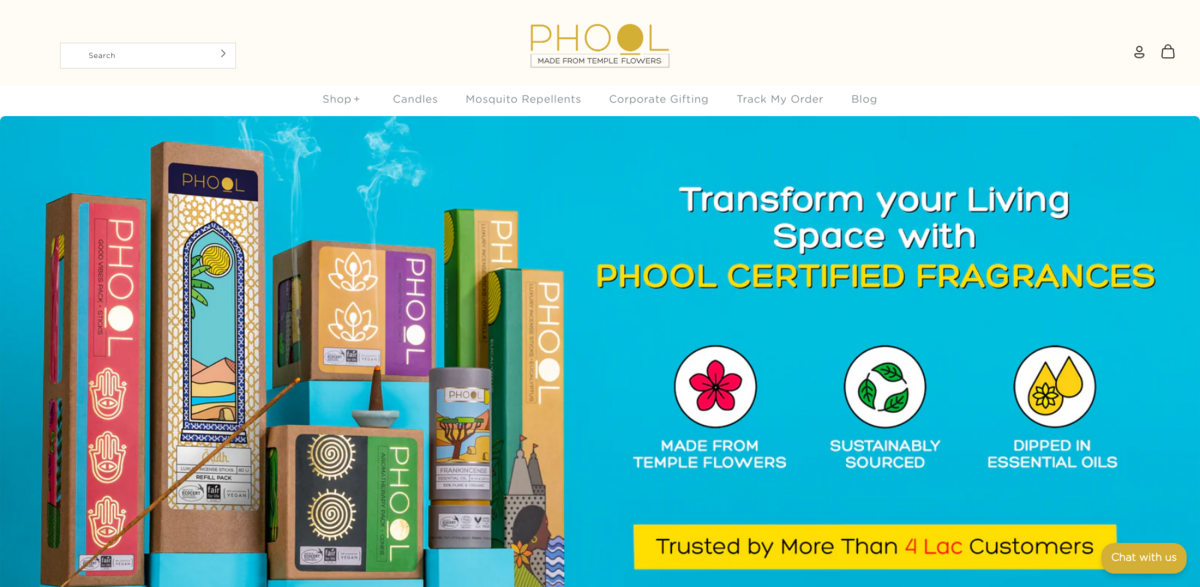
Phool is an innovative project that collects millions of sacred flowers offered in temples across India and transforms them into something truly special. These flowers, which would otherwise go to waste, are upcycled by over 300 women from marginalized communities into the world’s first certified, handcrafted incense products. It’s not just about making incense; it’s about creating a sustainable cycle that benefits people, the planet, and preserves cultural traditions. The process, known as flowercycling™, turns floral waste into organic fertilizer and incense sticks, giving new life to what was once discarded.
Main Benefits of Phool
Phool’s impact is impressive and measurable. Here are some key figures that highlight the project’s success:
- 22,060+ tons of temple flowers recycled
- 300+ marginalized women employed
- 11+ tons of floral pesticide offset
- 19+ children started school thanks to the initiative
These numbers tell a story of environmental care and social empowerment, showing how waste can be turned into opportunity.
Addressing the Pollution of the Ganges
The Ganges River, often seen as the lifeblood of Indian civilization, is facing a serious crisis. Pollution, over-extraction of water, and dried-up farm canals are threatening its very existence. Phool tackles this issue head-on by collecting floral waste from temples and mosques in Uttar Pradesh, preventing around 7,600 kilograms of waste flowers and 97 kilograms of toxic chemicals from entering the river every single day. This effort not only protects the river but also contributes to cleaner, healthier ecosystems.
Empowering Rural Women Through Flowercycling™
Phool’s model is deeply rooted in community empowerment. The project employs rural women self-help groups who handcraft the collected floral waste into patented organic fertilizers and incense sticks. This approach creates sustainable livelihoods and helps preserve traditional craftsmanship. By 2019, Phool planned to set up facilities in Varanasi, Warangal, Pune, and New Town Kolkata, aiming to provide jobs for 11,000 rural women and process 32 tonnes of waste daily. It’s a beautiful example of how environmental responsibility and social impact can go hand in hand.
Innovating with Florafoam™
Phool is not stopping at incense and fertilizer. The project is developing Florafoam™, a biomaterial designed to replace petroleum-based packaging. This innovation is part of a broader vision to revolutionize how India deals with waste flowers and packaging materials. By creating eco-friendly alternatives, Phool is pushing the boundaries of sustainability and encouraging a shift away from plastics and harmful chemicals.
Phool’s Contribution to Sustainable Development Goals (SDGs)
- SDG 1: No Poverty – by providing employment to marginalized women
- SDG 3: Good Health and Well-being – through reducing pollution and toxic waste
- SDG 5: Gender Equality – empowering women in rural communities
- SDG 6: Clean Water and Sanitation – protecting the Ganges from floral waste and chemicals
- SDG 12: Responsible Consumption and Production – upcycling floral waste into valuable products
- SDG 13: Climate Action – offsetting pesticide use and reducing plastic packaging
Looking Ahead: The Future of Phool
Phool continues to grow and innovate, with plans to expand its reach and impact. The upcoming Diwali Collection 2025 is eagerly awaited, promising more eco-friendly products that celebrate tradition while caring for the environment. Meanwhile, the project’s ongoing efforts in flowercycling™ and biomaterial development show a commitment to a greener, more inclusive future. It’s a journey of transformation—of waste into wealth, of communities uplifted, and of a planet better cared for.
What Phool actually does
Phool collects temple flower waste from the Ganges river region in Kanpur, India, and upcycles it into incense, natural dyes, and Fleather, a leather alternative made from flower fiber. The company employs local women to run the flower-collection and processing operations.
Proof, not just claims
Phool has been publicly recognized by Paul Polman, former CEO of Unilever, as an example of circular-economy business in India.
Why this belongs on a sustainability directory
Phool connects to SDG12 (Responsible Consumption and Production) by converting river-polluting temple flower waste into new materials instead of letting it decompose in waterways, and to SDG5 (Gender Equality) through its women-led collection and manufacturing workforce.
Frequently asked questions
Where is Phool based, and who uses it?
Phool is based in Kanpur, Uttar Pradesh, India, and sells its flower-waste-derived incense and Fleather products direct to consumers.
Which SDGs does Phool support, and how?
Phool supports SDG12 (Responsible Consumption and Production) by diverting temple flower waste from the Ganges into new materials, and SDG5 (Gender Equality) and SDG8 (Decent Work) by employing more than 300 women in its collection and manufacturing operations.
How is Phool verified as a sustainability project?
Phool holds Fair for Life-Fairtrade and Ecocert Organic & Natural certifications, and has been publicly recognized by Paul Polman, former CEO of Unilever, as a circular-economy example.
Looking for similar Waste & Recycling projects?
See Waste & Recycling projects on Keys for Tomorrow.