What the Project Is
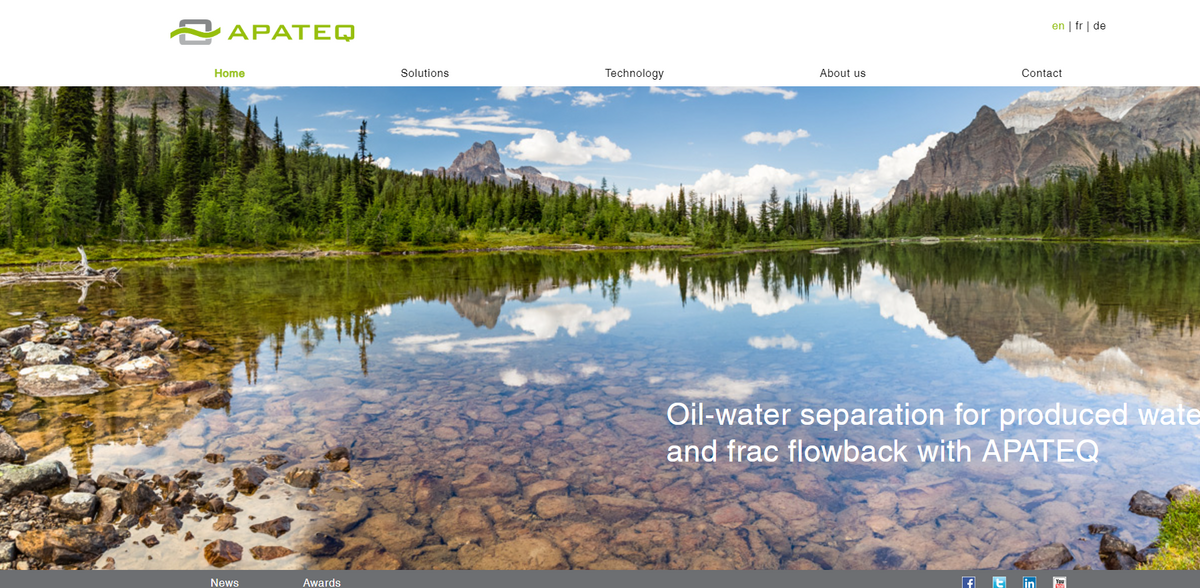
Oil-water separation for produced water and frac flowback with APATEQ stands at the forefront of sustainable water reuse in both on- and offshore oilfield treatments. The focus is on repurposing treated wastewater into a precious resource. APATEQ develops, produces and commercialises sustainable and cost-efficient solutions for difficult-to-treat wastewater. The system design is all about simplicity, efficiency, and a commitment to a circular economy… a system striving to avoid wasting fresh water by turning treated (waste)water into a new resource.
Main Benefit
Key figures and facts that make the project stand out include:
- 100% reuse of water
- No or little amounts of chemicals required for the process
- 100% oil recovery
- On-site treatment at oilfields on- and offshore
Innovative Technology Integration
APATEQ strode a new path by smartly combining traditional membrane filtration with proprietary process technologies. This blend results in compact systems that run at high performance levels, with low operational costs and—whenever possible—minimal usage of chemical additives. If chemicals are required for a specific project, they are used sparingly, ensuring an environmentally friendly solution with maximum efficiency. This integrated approach not only saves water but also contributes to a significant reduction in operating expenses.
Market-Driven Solutions
The project is not just about advanced technology—it is also about meeting critical market demands driven by ecological concerns and legal frameworks. For instance, the maritime industry benefits from systems like MarinePaq, which treats SOx/NOx scrubber wash water to comply with IMO regulations. In the oil and gas sector, produced water and frac flowback become a resource rather than waste. Other markets, such as landfill water run-off treated by LeachPaq, industrial water recycling enabled by WaterPaq, and energy industry produced water managed by OilPaq, all find a tailored solution. Each segment is targeted precisely because there is a real need, whether it be due to legislation or economic reasons.
Sustainable and Economical Impact
Central to the project’s design is sustainability—a commitment to protecting the environment while making sound economic sense. The technology does more than just treat water; it actively contributes to a circular economy by repurposing wastewater into a valuable resource. This approach makes it an essential asset in fields where water scarcity and high treatment costs are pressing issues. By emphasizing on-site treatment and drastically reducing chemical consumption, the project creates a dual impact: lowering carbon footprints and translating these efficiencies into tangible economic benefits. It’s the kind of solution that saves money, preserves natural resources, and champions a smarter use of water.
Operational Excellence in Challenging Environments
The project has been designed with the challenges of remote and harsh environments in mind. APATEQ’s compact systems ensure that even in remote locations, a high level of performance is maintained. The on-site treatment of wastewater at oilfields—whether offshore or onshore—eliminates the need for transporting potentially hazardous waste, thereby mitigating environmental risks. The integration of robust engineering with innovative process technologies results in systems that are not only reliable but also capable of achieving high recovery rates and consistent quality, even under strenuous conditions.
Project Impact on SDGs
- SDG 6: Clean Water and Sanitation – Ensuring sustainable management and use of water resources.
- SDG 9: Industry, Innovation and Infrastructure – Promoting inclusive and sustainable industrialization with innovative process solutions.
- SDG 11: Sustainable Cities and Communities – Facilitating safe, resilient, and sustainable water management for communities in remote and urban areas alike.
- SDG 12: Responsible Consumption and Production – Encouraging recycling and efficient use of resources to minimize waste.
Future Perspectives
Looking ahead, the project’s forward-thinking approach sets a benchmark for merging environmental sustainability with economic viability. The emphasis on legislative and ecological drivers will likely spur further innovations in wastewater treatment technology. As regulations tighten and the global demand for sustainable practices increases, the techniques deployed by APATEQ are set to gain even more relevance. The technology continues to evolve, providing enhanced functionality and efficiency—ensuring that water treated today can be reused tomorrow, with minimum environmental impact. With compact systems that streamline operations and reduce reliance on chemical additives, the project opens exciting prospects for a future where every drop of water is valued, saved, and repurposed effectively.
What APATEQ actually does
APATEQ designs turn-key oil-water separation and industrial wastewater treatment systems, sold under product lines including OilPaq, MarinePaq, LeachPaq and WaterPaq. The systems use membrane filtration and air injection rather than heavy chemical dosing, so wastewater is treated on-site and turned back into a reusable resource instead of being trucked away as hazardous waste.
Where APATEQ’s technology shows up
- Marine and shipping: the MarinePaq scrubber wash-water system treats exhaust gas cleaning water on board vessels before discharge.
- Industrial sites: oil-water separation for facilities generating contaminated process water.
- Landfill and waste sites: leachate treatment via the LeachPaq line.
Proof, not just claims
The company states its systems achieve full reuse of treated water and full recovery of separated oil, and holds ISO 9001:2015 certification for its management system.
Why this belongs on a sustainability directory
APATEQ’s on-site treatment directly supports SDG 6 (clean water and sanitation) by turning wastewater that would otherwise require hazardous transport and disposal into a treated, reusable resource, and SDG 12 (responsible consumption and production) by cutting the chemical load and waste volume tied to industrial and marine water use.
Frequently asked questions
Where is APATEQ based, and who uses it?
APATEQ is headquartered in Contern, Luxembourg. Its systems are used across marine, industrial and waste-management sectors, including scrubber wash-water treatment for shipping operators.
Which SDGs does APATEQ support, and how?
SDG 6 (clean water and sanitation): on-site membrane and air-injection treatment turns wastewater into a reusable resource instead of hazardous waste. SDG 12 (responsible consumption and production): reduces chemical use and enables water and oil recovery rather than disposal.
How is APATEQ verified as a sustainability project?
APATEQ holds the Solar Impulse Efficient Solution label, awarded to technologies that are both environmentally sustainable and economically viable, and is ISO 9001:2015 certified.
Looking for similar water management projects?
See Water management projects on Keys for Tomorrow.