Project Overview: The Effect of 81 Trees on an Area of 9 m²
This project is all about harnessing nature’s genius in a truly compact form. In just 9 m², the technology mirrors the natural benefits of 81 trees. The core idea is simple yet powerful: waste-free air filtration up to 5,000 m³/h, a cooling capacity of 6,500 W/h (down to -4 °C), fine dust reduction by 82%, and an impressive CO2e reduction of up to 342 kg per year. The system captures nature’s efficiency and applies it in a modular design that’s as innovative as it is eco-friendly. It’s like having nature’s own air purification system packaged into a sleek, urban solution.
Main Benefits of the Air Filtration System
The project delivers several noteworthy benefits that cater directly to improving urban air quality and environmental performance. Key figures and facts include:
- Waste-free air filtration up to 5,000 m³/h.
- Cooling capacity 6,500 W/h (down to -4 °C).
- Fine dust reduction 82%.
- CO2e reduction of up to 342 kg per year.
How the Air Filtration Works: Improving the Air in 4 Steps
The operation of this system unfolds in four straightforward steps… First, polluted, warm air is drawn in by the integrated fans, setting the stage for a comprehensive clean-up. Then, the air flows through vertical moss mats where, quite naturally, it gets cleaned and cooled. Following that, the refreshingly clean and cool air is released into the environment through an ecological shading design which also gives it a unique visual charm. Finally, integrated sensors jump into action, controlling the moss supply and measuring performance alongside environmental data in real time, ensuring that the system always works at its optimal capacity.
The Role of Vertical Moss Mats and Ecological Shading Design
At the heart of the filtration process are the vertical moss mats. These mats play a crucial role in cleaning the air, acting as a natural filter that captures particulate matter and pollutants. It’s an example of how nature can be harnessed for modern technology. Complementing this is the ecological shading design, which not only enhances the system’s efficiency by promoting proper airflow but also adds an aesthetic element reminiscent of natural landscapes. The combination delivers a harmony between engineered performance and nature-inspired design, making the entire idea feel refreshingly organic.
Real-Time Performance Monitoring and Environmental Impact
One of the system’s standout features is its integration of real-time monitoring. Using intelligent sensors, the project continuously controls the moss supply and tracks performance metrics and environmental data as they happen. This means that the system can adjust on the fly, ensuring that no resource is wasted and that every bit of energy contributes to cleaner air. It’s like having a smart assistant that never sleeps—constantly ensuring that the balance between technology and nature is perfectly maintained. This proactive management not only boosts performance but also provides valuable insights for future improvements in air quality management.
Project Impact on Sustainability Goals
- SDG 3: Good Health and Well-being – By reducing air pollutants, the project promotes a healthier living environment.
- SDG 11: Sustainable Cities and Communities – The modular, scalable design fits right into urban landscapes, making cities cleaner and more resilient.
- SDG 13: Climate Action – With significant CO2e reductions, the project directly contributes to mitigating climate change.
- SDG 15: Life on Land – By leveraging natural elements like moss, the project underscores the importance of preserving and integrating nature into everyday technology.
Conclusion: A Modular System for Cleaner, Cooler Air
In a nutshell, the concept of emulating the effect of 81 trees on just 9 m² is both groundbreaking and sustainable. The modular system brings together waste-free air filtration, exceptional cooling capacity, fine dust reduction, and notable CO2e reduction into one cohesive package. It’s impressive how the system translates natural processes into technological innovation, continuously monitoring key environmental indicators to ensure optimal performance. This vision, blending real-time data with natural filtering methods, sets the stage for a future where urban spaces can breathe easier, quite literally. The design not only addresses current environmental challenges but also paves the way for dynamic, scalable solutions that make city life healthier and more sustainable… a true statement on the power of combining technology with nature’s innate wisdom.
What Green City Solutions actually does
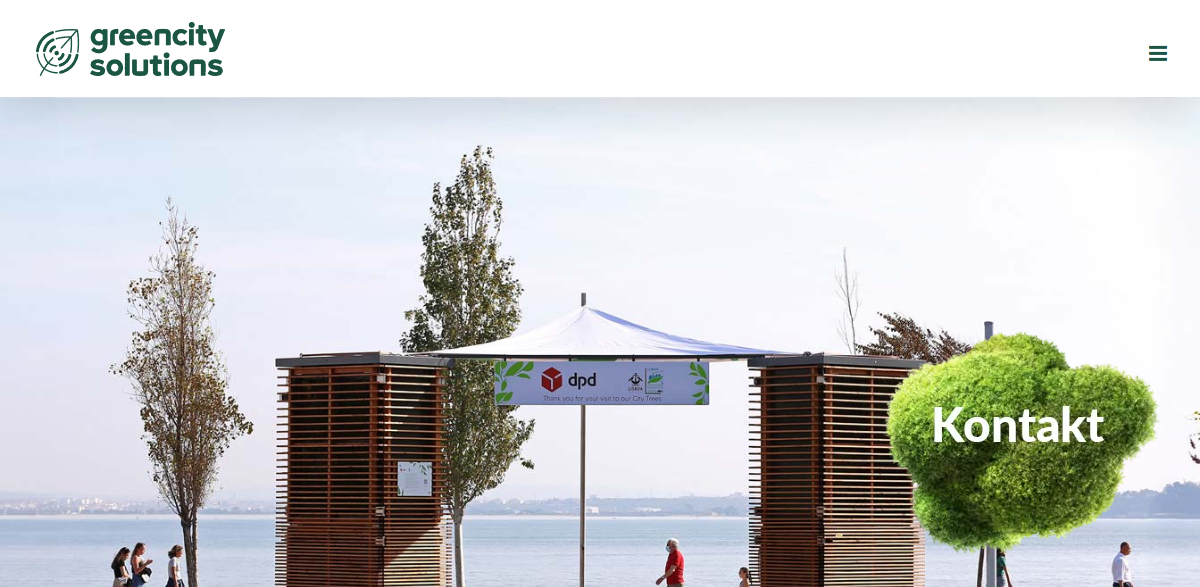
Green City Solutions builds the CityTree, a moss-based vertical air filter that mimics the pollution-absorbing capacity of a small stand of trees in a single freestanding unit. Moss-filled panels trap fine dust and particulates as air passes through, while integrated sensors monitor air quality in real time and trigger automated watering, so the system keeps performing without manual upkeep. The company also builds CityBreeze, an integrated variant, climAD, which pairs air filtration with outdoor advertising space, and MicroBreeze, a compact unit that won the Possehl Engineering Award in 2025.
Where the CityTree shows up
- Corporate campuses: Telekom has run a CityTree installation in Bonn for six years.
- Retail and shopping destinations: units are installed at Gohlis Arkaden in Leipzig, the EDU shopping destination in Bremen, and Nordseepassage in Wilhelmshaven.
- Public squares: Lutherstadt Wittenberg has a CityTree in its town square.
- Schools: Villa Elisabeth School in Wildau uses a unit on its grounds.
Proof, not just claims
One CityTree filters 5,000 m³ of air per hour and delivers up to 6,500 W of cooling capacity, a footprint the company describes as equivalent to 81 trees on just 9 m². The system also holds CE certification for product safety and was supported by EU Horizon 2020 funding.
Trusted by
Gohlis ArkadenLeipzig retail destination
Lutherstadt Wittenbergtown square installation
NordseepassageWilhelmshaven
Why this belongs on a sustainability directory
Green City Solutions ties directly to SDG11 (Sustainable Cities and Communities) by placing measurable air-filtration infrastructure inside dense urban sites like town squares and shopping districts, to SDG13 (Climate Action) through its certified annual CO2e reduction per unit, and to SDG15 (Life on Land) by replicating the pollution-absorbing function of trees in a modular, moss-based system that can be deployed where planting real trees is not possible.
Frequently asked questions
Where is Green City Solutions based, and who uses it?
Green City Solutions is based in Bestensee, Brandenburg, Germany, and was founded in 2014. Its CityTree air filtration units are installed by corporate, retail, municipal, and school clients, including Telekom in Bonn, Gohlis Arkaden in Leipzig, Lutherstadt Wittenberg, and Nordseepassage in Wilhelmshaven.
Which SDGs does Green City Solutions support, and how?
Green City Solutions supports SDG11 by deploying air-filtration infrastructure directly into urban public spaces, SDG13 through certified CO2e reductions per installed unit, and SDG15 by replicating the ecological air-purification role of trees in dense city environments where planting is often not feasible.
How is Green City Solutions verified as a sustainability project?
The CityTree’s filtering performance has been independently tested: ILK Dresden confirmed an 82% fine dust reduction and a 2.5°C temperature reduction around the unit, and the Tropos Institute certified a fine dust reduction of up to 53%. The system also holds CE certification for product safety and received EU Horizon 2020 funding support.
Looking for similar Conservation & Biodiversity projects?
See Conservation & Biodiversity projects on Keys for Tomorrow.