Myfood: A New Way to Grow Food Sustainably
Experience the Future of Home-Grown Food
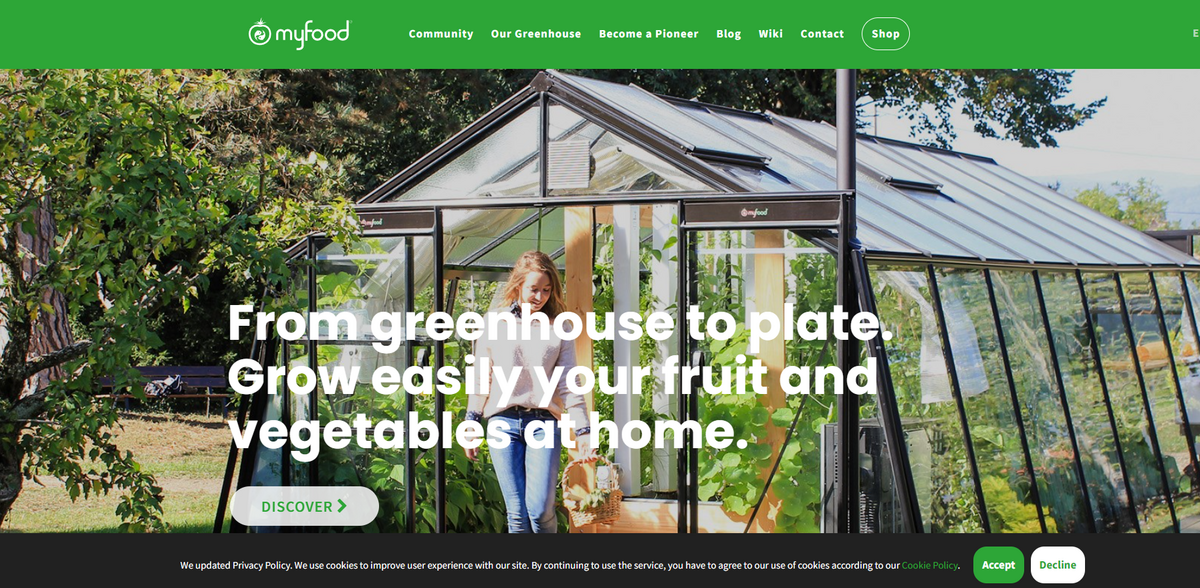
Imagine a world where you can grow your own food right at home. Myfood is making this dream a reality with their innovative aquaponic smart greenhouses. These greenhouses are designed to help you produce fresh fruits and vegetables all year round. With the support of agronomists and a passionate community, you can learn how to grow your own food easily. This project is not just about growing food; it’s about creating a sustainable future for everyone.
Key Benefits of Myfood
- Home-grown food all year round
- Less than 2 hours of maintenance per week
- Water savings compared to traditional gardening
- Support from agronomists and a community of users
- Connected sensors to optimize your harvests
Understanding Myfood
Myfood is a project that combines technology and nature. It uses aquaponics, which is a method that combines fish farming with growing plants. The fish provide nutrients for the plants, and the plants help clean the water for the fish. This creates a closed-loop system that is good for the environment. You can grow a variety of fruits and vegetables in your own backyard, no matter the season. It’s like having a mini farm right at home!
The Advantages of Aquaponics
Aquaponics is a sustainable way to grow food. It uses less water than traditional gardening because it recycles water in a closed system. This means you can save water while still growing healthy food. Plus, you don’t need to use harmful pesticides or fertilizers. The system is designed to be low-maintenance, so you can spend more time enjoying your harvest and less time working in the garden.
Building a Supportive Community
With Myfood, you are never alone. There is a strong community of users who share their experiences and tips. You can connect with other growers, ask questions, and learn from each other. Agronomists are also available to provide guidance and support. This community aspect makes growing your own food more enjoyable and less intimidating.
Commitment to Environmental Impact
Myfood is committed to making a positive impact on the environment. By promoting local food production, they help reduce the carbon footprint associated with transporting food. The project also encourages biodiversity by avoiding harmful chemicals. This means healthier ecosystems and better food for everyone. It’s a step towards a more sustainable future.
Steps to Get Started
Starting your journey with Myfood is easy. You can choose from different greenhouse models that fit your needs. The installation is done for you, and you’ll receive all the support you need to get started. In just a few weeks, you can begin harvesting your own fresh fruits and vegetables. It’s a fun and rewarding experience that brings you closer to nature.
UN Sustainable Development Goals Linked to Myfood
- Goal 2: Zero Hunger
- Goal 6: Clean Water and Sanitation
- Goal 11: Sustainable Cities and Communities
- Goal 12: Responsible Consumption and Production
- Goal 13: Climate Action
For more information about Myfood and how you can start growing your own food, visit Myfood.
What Myfood actually does
Myfood, based in Molsheim, Alsace, France since 2015, builds connected aquaponic greenhouses for homes and professionals. Aquaponics combines fish and plants: the fish nourish the plants and the plants purify the water, removing the need for chemical fertilisers. Plants grow in vertical towers above the fish tanks plus permaculture beds, while sensors track temperature, pH and humidity on a dashboard.
Where the greenhouses show up
- Households: family greenhouses producing up to 400 kg of organic vegetables a year, with about two hours of maintenance a week.
- Water autonomy: an optional rainwater module stores 700 litres, giving up to four weeks of autonomy.
- Across Europe: 32% of sales come from outside France.
Proof, not just claims
Trusted by
BpifrancePublic investment bank partner
European CommissionGrant 826614
BNP ParibasBanking partner
Why this belongs on a sustainability directory
Myfood supports SDG 6 (clean water and sanitation) through recirculating aquaponics and rainwater storage that cut the water needed to grow vegetables, and SDG 2 (zero hunger) and SDG 12 (responsible consumption and production) by letting households produce a large share of their own vegetables without chemical fertilisers.
Frequently asked questions
Where is Myfood based, and who uses its greenhouses?
Myfood is based in Molsheim, Alsace, France and has operated since 2015. More than 1,500 of its greenhouses are installed, mainly with households, and 32% of sales come from outside France.
Which SDGs does Myfood support, and how?
SDG 6 (clean water and sanitation): recirculating aquaponics that the company says uses up to 90% less water, plus a 700-litre rainwater module. SDG 2 (zero hunger): up to 400 kg of organic vegetables a year per greenhouse, 415 tonnes harvested across the network in 2025. SDG 12 (responsible consumption and production): local food grown without chemical fertilisers.
How is Myfood verified as a sustainability project?
Myfood France SAS has been a Certified B Corporation since September 2022, and its greenhouse received the Solar Impulse Foundation’s Efficient Solution label in August 2019.
Looking for similar agriculture and food projects?
See Agriculture & food projects, or browse all Food & Beverage projects.