What is the Scripps Institution of Oceanography at UC San Diego?
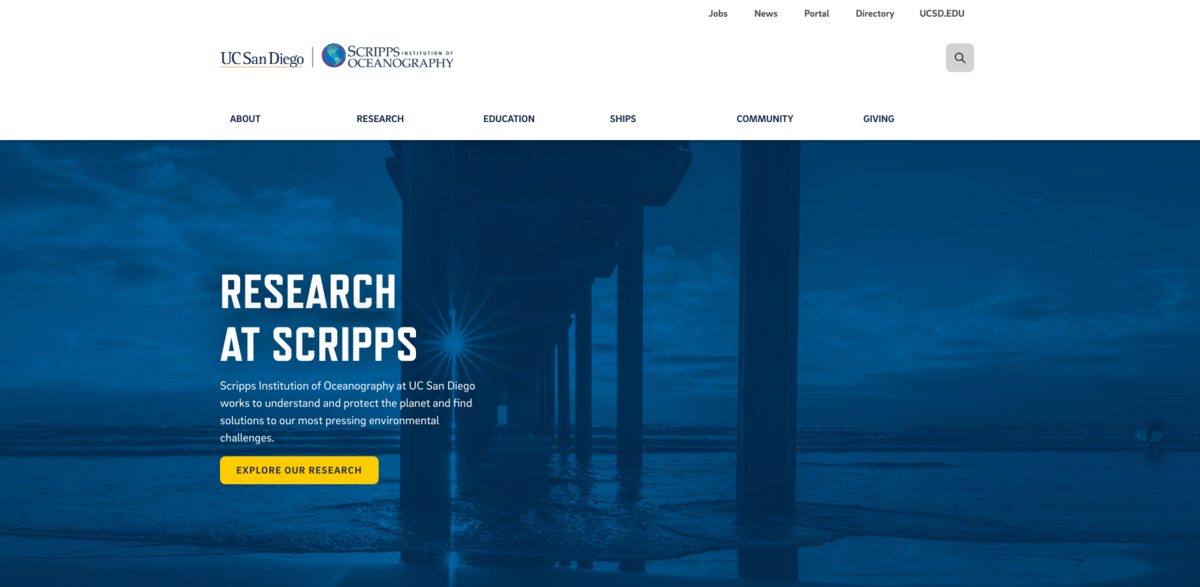
The Scripps Institution of Oceanography at UC San Diego is all about understanding and protecting our planet. It’s a hub for tackling some of the most urgent environmental challenges we face today. From the depths of the ocean to the atmosphere above, Scripps dives deep into research that helps us make sense of the changing world around us. It’s not just about studying the planet—it’s about finding real solutions that matter.
Why Scripps Matters: Key Facts and Figures
Here’s a quick look at what makes Scripps stand out:
- Keeling Curve: The global record tracking atmospheric carbon dioxide levels—an essential tool in climate science.
- Argo: A worldwide network of robotic floats measuring ocean conditions, providing vital data on our changing seas.
- Oceanographic Collections: Extensive archives of marine organisms and geological samples that support ongoing research.
Undergraduate Education at Scripps
For those curious about earth, atmospheric, and marine sciences, Scripps offers a range of undergraduate degrees, minors, and courses. It’s a place where students don’t just learn from textbooks—they get hands-on experience that prepares them for real-world challenges. Whether it’s exploring oceanography or studying climate systems, the education here is designed to inspire and equip the next generation of scientists.
Graduate Programs: Where Research Meets Learning
Graduate students at Scripps dive into PhD and Master’s programs that blend rigorous academics with cutting-edge research. It’s not just about theory; it’s about rolling up sleeves and contributing to groundbreaking discoveries. These programs are crafted to develop leaders who will push the boundaries of environmental science and innovation.
Research Internships and Opportunities
Internships and Research Experiences for Undergraduates (REU) programs at Scripps offer students a chance to get involved in real scientific projects. These opportunities provide invaluable experience, connecting classroom knowledge with fieldwork and lab research. It’s a stepping stone for anyone passionate about making a difference in environmental science.
Impacting Global Goals: Scripps and Sustainable Development
- SDG 13: Climate Action – Leading research on climate change and solutions.
- SDG 14: Life Below Water – Protecting marine ecosystems through science.
- SDG 4: Quality Education – Training future environmental leaders.
- SDG 3: Good Health and Well-being – Studying impacts of environmental changes on public health.
- SDG 17: Partnerships for the Goals – Collaborating globally to tackle environmental challenges.
Monitoring the Pulse of Our Planet
At the heart of Scripps’ work is a commitment to observing how the planet is changing. The institution pioneered the modern era of climate change research and continues to lead globally in this field. From tracking rising sea levels and ocean acidity to understanding impacts on ecosystems and public health, Scripps is on the front lines. It’s about more than data—it’s about training the next generation of scientific and environmental leaders ready to face these challenges head-on.
What Scripps Institution of Oceanography actually does
Scripps Institution of Oceanography at UC San Diego describes itself as “one of the most important centers for global earth science research and education in the world.” Its scientists study the oceans, the solid Earth and the atmosphere to work on major environmental problems, with stated focus areas that include climate change impacts and adaptation, hazard resilience, conservation and biodiversity, ocean and human health, and technology for observing the planet.
Founded in 1903 in a rented boathouse space, Scripps now runs its own research fleet, maintains the Keeling Curve record of atmospheric carbon dioxide, trains PhD, master’s and undergraduate students, and operates Birch Aquarium as its public exploration center. Its tagline sums up the purpose: “Understanding and Protecting the Planet Since 1903.”
Where Scripps shows up
- Climate science: maintains the Keeling Curve, a daily record of global atmospheric CO2 concentration measured at Mauna Loa Observatory
- Ocean research at sea: operates research vessels including R/V Sally Ride and R/V Roger Revelle
- Education: PhD, master’s and undergraduate programs, plus a one-year Master of Advanced Studies
- Public engagement: Birch Aquarium showcases Scripps research and more than 60 marine habitats
Proof, not just claims
The Keeling Curve has tracked atmospheric carbon dioxide daily since 1958. Scripps operates R/V Sally Ride and R/V Roger Revelle under a charter agreement with the Office of Naval Research, and the National Science Foundation provides major support for its research vessels.
Trusted by
National Science FoundationMajor supporter of Scripps research vessels
Why this belongs on a sustainability directory
Protecting oceans and climate starts with measuring them. Scripps produces the long-running data and field research that policy and conservation depend on: the Keeling Curve tracks the rise in atmospheric CO2 behind SDG 13 (Climate Action), its fleet and marine research build the evidence base for SDG 14 (Life Below Water), and its earth science and conservation and biodiversity work support SDG 15 (Life on Land).
Frequently asked questions
Where is Scripps Institution of Oceanography based, and who uses it?
Scripps is part of UC San Diego and is based in La Jolla, California, United States. It was founded in 1903. Its research serves scientists, students, government agencies and the public, including visitors to Birch Aquarium.
Which SDGs does Scripps Institution of Oceanography support, and how?
SDG 13 (Climate Action) through climate research and the Keeling Curve CO2 record, SDG 14 (Life Below Water) through ocean research at sea and marine habitat work, and SDG 15 (Life on Land) through earth science and conservation and biodiversity research.
How is Scripps Institution of Oceanography verified as a sustainability project?
Scripps holds no sustainability certification. Its credibility rests on its status as a UC San Diego research institution, its maintenance of the Keeling Curve since 1958, and federal support for its research fleet from the Office of Naval Research and the National Science Foundation.
Looking for similar conservation and biodiversity projects?
Browse all Conservation & Biodiversity projects on Keys for Tomorrow.