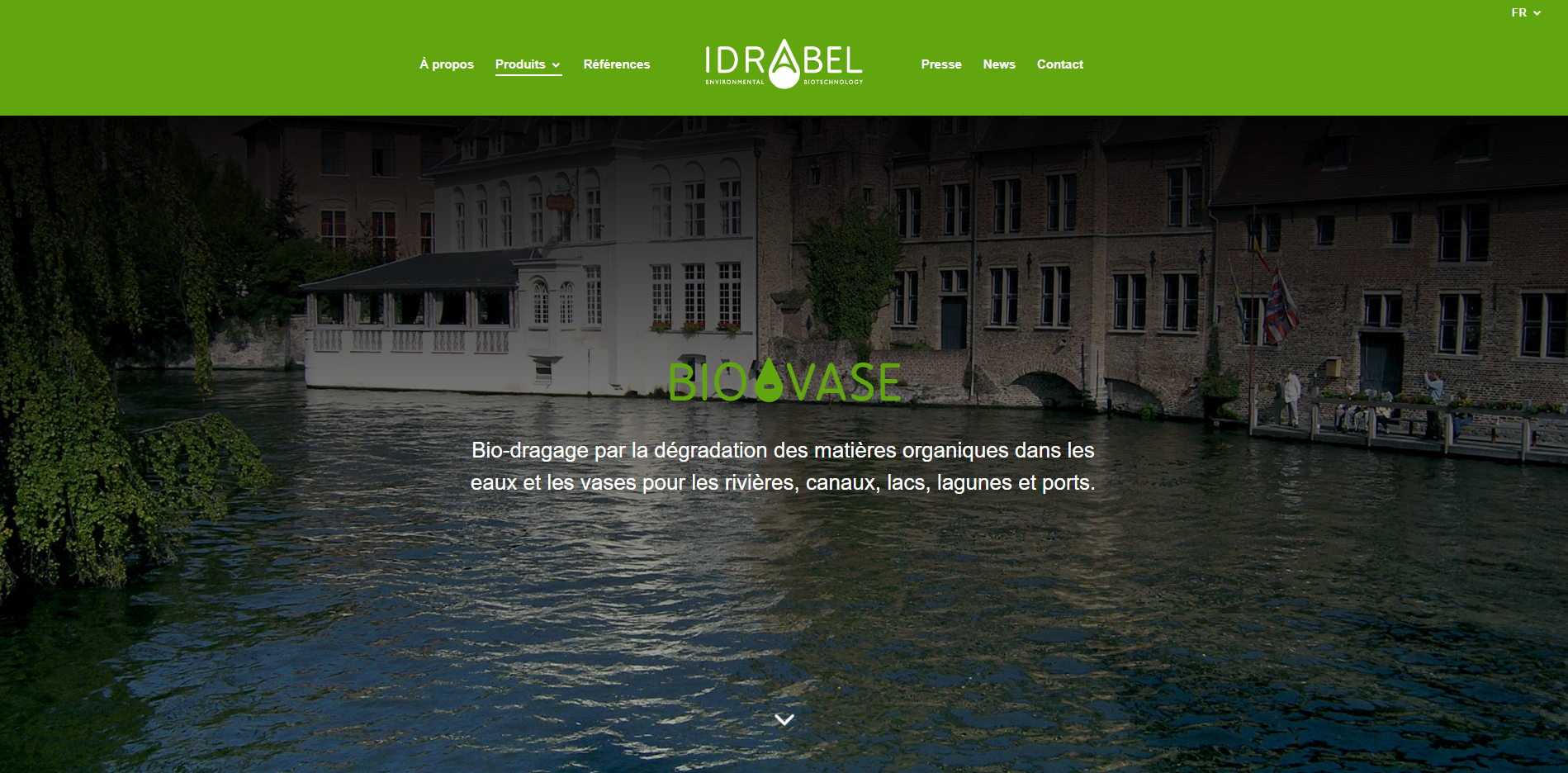
Bio-Vase HC is a biological way to get rid of organic silt, clean up hydrocarbon pollution, and catch heavy metals.
The approach seeks to reduce the organic component of silt in bodies of water (lakes, rivers, ponds, harbors, etc.) while also treating hydrocarbon pollution and trapping heavy metals. The Bio-Vase HC uses a combination of bacteria, mushrooms, trace elements, and enzymes fixed on a variety of mineral carriers to treat organic pollutions in water bodies and silt without the requirement for silt removal and transportation.
Positive facts about Bio-Vase HC
- 1.25kg of Bio-Vas HC can digest” 1m3 of organic silt
- No more transportation of the “removed” silt : 100% emissions reduction
- No need for further “removed” silt treatment : 100% energy savings
- Cost of removing 1m3 of silt : 20€ with Bio-Vase HC Vs 75-100€ with the traditional mechanical dredging method
- No added costs of “removed” silt treatment
Video about Bio-Vase HC
Bio-Vase HC website
https://idrabel.be/bio-vase/
More on this subject :
- 15 selected Apps & solutions for climate change
- All Belgian sustainable initiatives
- Reimagining Our Waste: A New Approach for Improved Sustainability
- Sustainable Solutions for Taking on Climate Change
Help us driving the change on Instagram, Pinterest, Linkedin, Twitter or Medium.