What Greenpeace UK Is All About
Greenpeace UK is a bold defender of the natural world, standing firm against destruction. Their mission? To shake up politics, industry, and society, pushing for a greener and fairer planet. It’s not just about protests or campaigns—it’s a movement of ordinary people doing extraordinary things. Together, they’re building a world that’s peaceful, green, and inclusive, where no one gets left behind. They target the root causes of environmental crises and use a powerful toolbox of tactics to expose and challenge those responsible. And here’s the kicker—they’re independent, not paid or swayed by any government or corporation. They show up, stand up, and get things done. Then, they do it all over again tomorrow.
The Main Benefit: Driving Real Change
Greenpeace UK’s work delivers tangible impact through various approaches. Here are some key facts and figures that highlight their influence:
- Founded in 1977, Greenpeace UK has been at the forefront of environmental activism for decades.
- They use peaceful protest and non-violent direct action to spotlight and obstruct wrongdoing.
- Millions unite in mass actions, amplifying voices to make a difference together.
- Science and research uncover environmental crimes, holding perpetrators accountable.
- Lobbying efforts directly influence political and business leaders to act responsibly.
- They aim to halve emissions and restore biodiversity by the end of this decade.
A Look Back: Greenpeace’s History in Key Moments
Greenpeace’s journey is packed with iconic moments that shaped its identity. It all began in 1971 with a small group sailing from Vancouver to protest nuclear testing in Alaska. Early campaigns against nuclear bombs in the Pacific grabbed international attention. By 1975, activists were confronting Soviet whalers, creating unforgettable images that captured global headlines. Greenpeace UK officially opened its doors in London in 1977, supporting global anti-whaling and anti-sealing efforts. The 1985 bombing of the Rainbow Warrior by French secret agents was a tragic but pivotal moment, highlighting the risks activists face. Victories like the 1995 Brent Spar campaign forced Shell to rethink ocean dumping. The 2006 Kingsnorth coal plant shutdown campaign marked a decade-long fight against fossil fuels. And the 2013 Arctic 30 incident sparked worldwide outrage after Russian authorities detained activists protesting Arctic oil drilling. Fast forward to 2021, Greenpeace celebrated 50 years of relentless activism, and in 2022, their decades-long push helped secure a strong Global Ocean Treaty—one of the greatest conservation wins ever.
What Greenpeace UK Actually Does
Greenpeace UK’s work is diverse but focused. They rely on peaceful protest and direct action to confront environmental wrongs head-on. Mass actions bring millions together, proving that collective voices can’t be ignored. Science and research back their campaigns with solid evidence, exposing environmental crimes and demanding accountability. Lobbying ensures that decision-makers hear the call for change loud and clear. It’s a multi-pronged approach, combining grassroots energy with strategic influence to create lasting impact.
Vision and Mission: The Heart of Greenpeace UK
The vision is clear and inspiring: a world where everyone enjoys equal access to clean air, water, and energy. A world where nature is protected, precious habitats restored, and communities united by ambitious climate action. The mission? To halve emissions and restore biodiversity by the end of this decade, and to do it all in a fair and equitable way. It’s about balancing urgency with justice, making sure the planet and its people thrive together.
Project Impact: Sustainable Development Goals Linked to Greenpeace UK
- SDG 6: Clean Water and Sanitation – Protecting water sources and ecosystems.
- SDG 7: Affordable and Clean Energy – Promoting renewable energy and reducing fossil fuel reliance.
- SDG 13: Climate Action – Driving efforts to halve emissions and combat climate change.
- SDG 14: Life Below Water – Campaigning for ocean protection and the Global Ocean Treaty.
- SDG 15: Life on Land – Restoring biodiversity and protecting habitats.
- SDG 16: Peace, Justice, and Strong Institutions – Advocating for transparency and accountability.
How to Get Involved and Support Greenpeace UK
Greenpeace UK invites everyone to join the movement. Whether it’s volunteering, supporting campaigns, or simply spreading the word, there’s a place for all kinds of contributions. The power of ordinary people coming together can’t be underestimated. It’s about standing up, speaking out, and making a difference—today, tomorrow, and beyond.
What Greenpeace UK actually does
Greenpeace UK is the British branch of Greenpeace, the environmental campaigning organization founded in 1971 in Vancouver, Canada, with a UK office established in London in 1977. It campaigns for direct environmental action and policy change, funded entirely by individual supporters. It states plainly that it does not accept money from governments or corporations, keeping it independent from the industries it campaigns against.
Where the campaigns show up
- Ocean protection: multi-decade advocacy behind the 2022 Global Ocean Treaty and current campaigns for bottom-trawling bans across UK Marine Protected Areas.
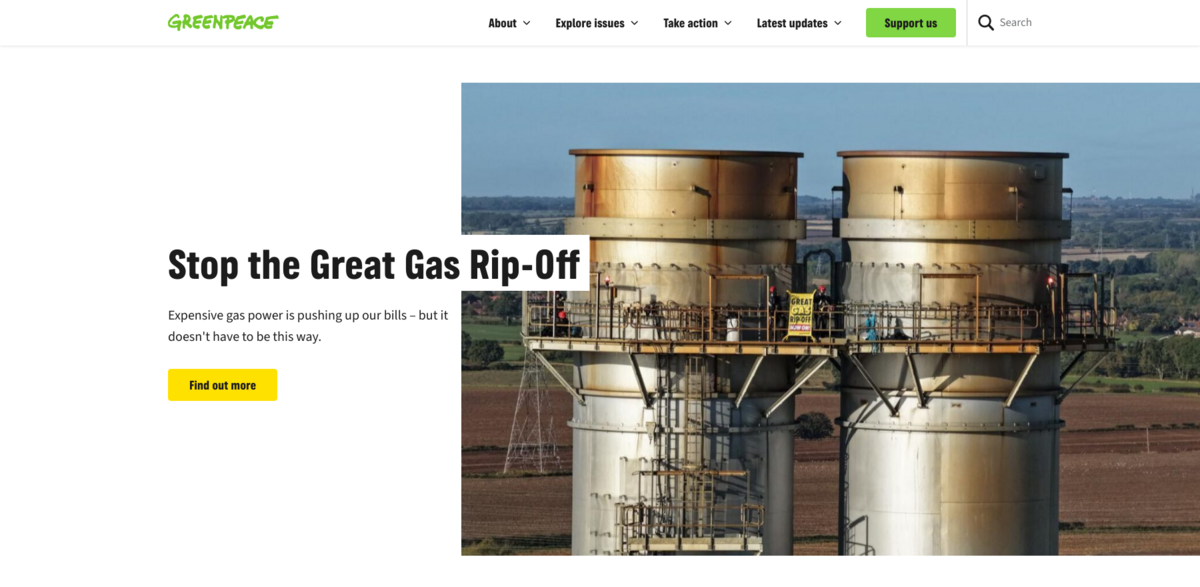
- Climate policy: campaigns against North Sea oil expansion, fracking, and gas-linked electricity pricing.
- Corporate accountability: direct actions targeting major polluters, including oil company profit-tracking campaigns.
- Public petitions: large-scale supporter petitions on issues like disposable vapes and extreme-heat protection.
Proof, not just claims
Greenpeace UK’s campaign history includes forcing Shell to dismantle the Brent Spar oil platform on land in 1995 rather than sinking it at sea, and a decade-long campaign that led to the shutdown of the Kingsnorth coal-fired power station starting in 2006.
Why this belongs on a sustainability directory
Greenpeace UK connects directly to SDG 13 (climate action) through its campaigns against fossil fuel expansion, SDG 14 (life below water) through its multi-decade push for the Global Ocean Treaty and marine protected areas, and SDG 15 (life on land) through habitat restoration and biodiversity campaigns.
Frequently asked questions
Where is Greenpeace UK based, and who uses it?
Greenpeace UK is based in London, England, part of Greenpeace International, which was founded in 1971 in Vancouver, Canada. It is funded by individual supporters rather than governments or corporations, and mobilizes the public through campaigns and petitions on environmental issues.
Which SDGs does Greenpeace UK support, and how?
Greenpeace UK supports SDG 13 (climate action) through fossil fuel and emissions campaigns, SDG 14 (life below water) through ocean protection work including the 2022 Global Ocean Treaty, and SDG 15 (life on land) through biodiversity and habitat restoration campaigns.
How is Greenpeace UK verified as a sustainability project?
Greenpeace UK’s track record includes documented campaign outcomes such as the 1995 Brent Spar decision and the Kingsnorth coal plant shutdown, along with its stated policy of refusing government or corporate funding to preserve campaign independence.
Looking for similar Conservation & Biodiversity projects?
See Conservation & Biodiversity projects on Keys for Tomorrow.