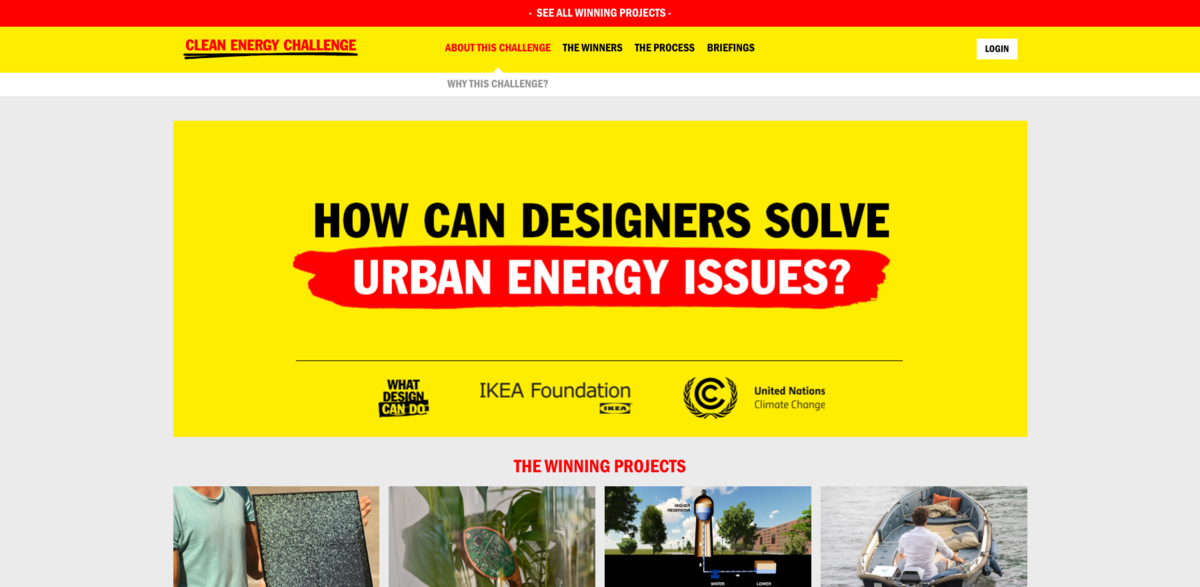
What is the Clean Energy Challenge?
The Clean Energy Challenge is a global initiative spotlighting innovative projects that tackle energy issues with creativity and impact. It brings together diverse minds from different industries to solve complex problems through a mix of knowledge, best practices, and multidisciplinary skills. The challenge showcases 19 winning projects, each offering unique solutions that range from solar-powered visuals to bio-based building materials. These projects don’t just aim to innovate—they strive to transform cities and communities by making energy more sustainable, accessible, and efficient.
Main Benefits of the Winning Projects
Here’s what makes these projects stand out:
- Local insights and collaboration with existing organizations ensure relevance.
- Positive impact on people, places, and systems with clear metrics to measure success.
- Feasibility across technical, economic, political, legal, social, cultural, and psychological dimensions.
- Scalability potential to expand benefits beyond initial locations or communities.
- Excitement generated by new, creative ideas with compelling stories to share.
- Strong commitment from well-balanced and highly dedicated teams.
The Winning Projects in Detail
The Clean Energy Challenge features a diverse lineup of projects, each with its own flavor and focus. For example, Solar Visuals uses solar technology in innovative ways, while Roots Are The New Wires explores off-grid lighting solutions. Others like Iconic Energy Storage and Boat Battery Swap focus on energy storage and swapping systems. The list goes on, including projects like Block-E, Mfuko-Fresh, and Solar Freeze. Each project brings something fresh to the table, addressing energy challenges from different angles.
Voices from the Jury
The jury members bring valuable perspectives on why these projects matter. Francoise Lavertu, Tesla’s Country Director, highlights the power of cross-industry collaboration: “People coming together from different industries can come up with solutions to complex problems, through the mix of their wide knowledge, understanding of best practices and multidisciplinary skill sets.” Ayush Chauhan, co-founder of Quicksand, points out the global impact: “When you look at these ideas you can actually script the energy transition for any of these cities. That’s the power of a global challenge, the cross-pollination it brings on across cities is what we need.” Saskia Van Stein from Bureau Europa adds a poetic touch: “Like poetry finds the spaces between words, the winning projects find spaces of different scales in the existing city, either in communities, through technology, or on a systemic structural level.”
Judging Criteria That Shape Success
The Clean Energy Challenge judges projects based on six key criteria that ensure the ideas are not just good on paper but ready to make a real difference:
- Relevance: Deep local insights and collaboration with existing solution providers.
- Impact: Clear positive effects on people, places, and systems with measurable outcomes.
- Feasibility: Practicality across technical, economic, political, legal, social, cultural, and psychological factors.
- Scalability: Potential to grow beyond the initial community or location.
- Excitement: Fresh, creative ideas that tell compelling stories.
- Commitment: Strong, balanced teams dedicated to developing the idea.
Impact on Sustainable Development Goals (SDGs)
- SDG 7: Affordable and Clean Energy
- SDG 11: Sustainable Cities and Communities
- SDG 12: Responsible Consumption and Production
- SDG 13: Climate Action
- SDG 9: Industry, Innovation, and Infrastructure
Why the Clean Energy Challenge Matters
At its core, the Clean Energy Challenge is about more than just technology or innovation—it’s about people, communities, and the future of our planet. These projects demonstrate how creative thinking combined with local knowledge can lead to solutions that are not only effective but also scalable and exciting. The challenge fosters a global conversation, encouraging cross-pollination of ideas that can script the energy transition for cities worldwide. It’s a reminder that when diverse minds come together, the possibilities are endless… and the future looks a little brighter.
What the Clean Energy Challenge actually does
The Clean Energy Challenge is a global design competition run by What Design Can Do, an Amsterdam-based nonprofit design platform founded in 2011. It invites entries from more than 50 countries to develop clean-energy solutions, judged on relevance, impact, feasibility, scalability, excitement, and commitment.
“People coming together from different industries can come up with solutions to complex problems, through the mix of their wide knowledge, understanding of best practices and multidisciplinary skill sets.”
Francoise Lavertu, Country Director, Tesla, Challenge Juror
Where the Clean Energy Challenge shows up
- Global design competition: open submissions from designers and innovators across more than 50 countries.
- Focus cities: Amsterdam, Mexico City, Delhi, São Paulo, and Nairobi as geographic anchors for entries.
Proof, not just claims
Named supporters of the challenge include the IKEA Foundation, the UNFCCC, Tesla, Climate Ventures, and ABN AMRO.
Trusted by
TeslaProgram supporter, jury seat
UNFCCCProgram supporter
ABN AMROProgram supporter
Why this belongs on a sustainability directory
The Clean Energy Challenge connects to SDG7 (Affordable and Clean Energy) and SDG17 (Partnerships for the Goals) by pooling entries from designers across dozens of countries and pairing them with named institutional and corporate partners rather than running as a purely internal design exercise.
Frequently asked questions
Where is the Clean Energy Challenge based, and who uses it?
It is run by What Design Can Do, an Amsterdam-based nonprofit design platform founded in 2011. Entrants come from more than 50 countries, with focus cities including Amsterdam, Mexico City, Delhi, São Paulo, and Nairobi.
Which SDGs does the Clean Energy Challenge support, and how?
SDG7 and SDG17: the challenge sources clean-energy design solutions globally and connects winning projects with named partners including the IKEA Foundation, Tesla, and the UNFCCC.
How is the Clean Energy Challenge verified as a sustainability project?
One documented edition received 452 project submissions, judged by a named 10-member jury including representatives from Tesla and Bureau Europa, with 20 winners publicly announced.
Looking for similar Solar energy projects?
See Solar energy projects, or browse all Energy projects.